
Italian Specialty Meats: A Guide for Delis and Restaurants
From prosciutto di Parma to sopressata, discover the varieties, proper storage, and serving suggestions for your menu.
July 22, 2015

Ask anyone at Cara Donna Provision where Italian food culture put down its deepest roots outside of Italy, and you might expect the answer to be Boston's North End, or New York, or New Haven. Those are the neighborhoods we have served for three generations, and the Italian-American tradition they represent is the heart of our business. But there is another answer, one that surprises many of our customers: Argentina.
Between the 1880s and the 1930s, millions of Italians boarded ships in Genoa and Naples. Roughly half of them sailed for the ports of North America. The other half sailed south, to Buenos Aires. Today, by most estimates, more than half of all Argentines have some Italian ancestry — a higher share than in any other country outside Italy itself. The result is a national cuisine that any New England deli owner would recognize instantly, and yet find fascinatingly foreign.
The parallels between the Italian-American story and the Italian-Argentine story are striking. In both countries, immigrants arrived with little more than trade skills and recipes. In both, they opened bakeries, salumerias, and trattorias that fed their own communities first and won over the whole city later. And in both, the cuisine adapted to local ingredients and local tastes until it became something new — neither Italian nor entirely native, but a third thing with a life of its own.
The scale of the southern migration is hard to overstate. The Italian Argentine community shaped not just the country's food but its dialect, its architecture, and its daily rhythms. The Spanish spoken in Buenos Aires carries an unmistakable Italian cadence, and the city's café culture owes as much to Turin as to Madrid.
Just as Italian-American cooking produced dishes no Italian village ever knew — chicken parmigiana, the New England style Italian sub — Argentina produced its own inventions. A few of them deserve a place in any food lover's vocabulary.
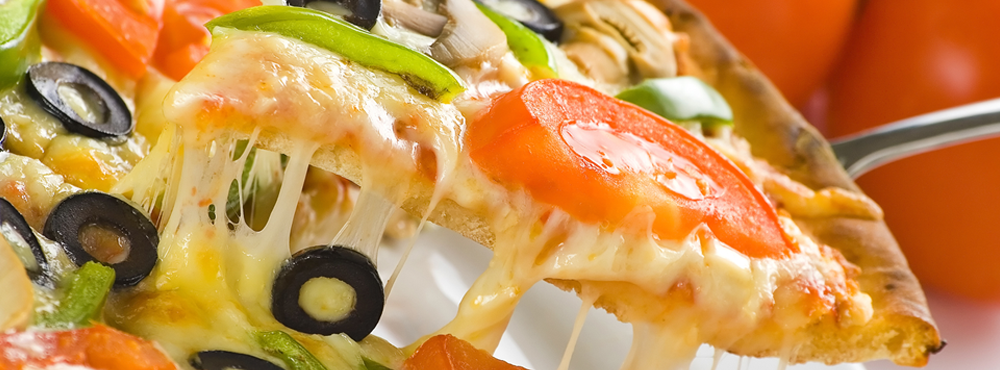
Buenos Aires may have more pizzerias per capita than any city in the world, and its signature style — thick, doughy media masa crust buried under an extravagant layer of mozzarella — is judged by the generosity of its cheese above all else. The most famous local creation is the fugazzeta, a stuffed pizza layered with cheese and sweet onions that descends directly from the Ligurian focaccia the immigrants brought with them.
Argentina's beloved breaded cutlet topped with tomato sauce, ham, and melted cheese sounds like it should come from Naples. The story locals tell is better: it was improvised in the 1940s at a Buenos Aires restaurant called Nápoli, named for its owner, when a cook rescued an overcooked milanesa by dressing it like a pizza. It is now on virtually every menu in the country.
The Argentine Sunday lunch — extended family around a long table, platters of homemade sorrentinos or tallarines — mirrors the Italian-American Sunday dinner tradition our own customers know well. One ritual is purely Argentine: on the 29th of every month, families and restaurants across the country serve ñoquis (gnocchi), often with a banknote tucked under the plate for luck and prosperity in the month ahead.
Perhaps the most Argentine dish of all is the simplest: a thick round of provolone-style cheese seared over the coals of an asado until it is crisp outside and molten inside. It is the meeting point of the two cultures — an Italian cheese cooked over the fire of the gaucho grill, eaten before the beef arrives.
Italian food did not merely survive the crossing to Argentina. It moved into the house, learned the language, and ended up setting the table for the entire nation.
Food is only half of the picture. What strikes visitors from the United States most is when and how Argentines eat. Dinner rarely starts before nine in the evening, and on weekends restaurants fill closer to eleven. Afterward comes the sobremesa — the long, unhurried stretch of conversation at the table after the plates are cleared, a habit inherited from both Italian and Spanish traditions that can easily outlast the meal itself.
Those late, sociable evenings have adapted to the digital age faster than almost anywhere else in Latin America. Argentina has one of the region's highest smartphone penetration rates, and the evening hours that once belonged entirely to the bodegón are now shared with delivery apps, streaming, and mobile entertainment. The country's app-based delivery platforms mean a fugazzeta arrives at the door in thirty minutes, and entertainment brands have followed the same mobile-first path — platforms such as Bodog, a name Argentines associate with online poker and casino games, built their local offering around the phone for exactly this late-night, at-home audience. The pattern is one restaurateurs everywhere now recognize: the evening is a competition for attention, and the kitchen competes with the screen.
For Argentine restaurant owners, the response has been to lean into what a screen cannot deliver — the theater of the parrilla, the shared sobremesa, the neighborhood familiarity of a bodegón where the waiter knows your order. It is a lesson with obvious echoes for American operators, and a theme explored in depth by the broader literature on Argentine cuisine and its dining culture.
Why should a wholesale distributor in New England care about any of this? Because Argentine-Italian cooking is a preview of how far the products we carry can stretch. The same provolone we discuss in our guide to cheese in foodservice becomes provoleta on a Buenos Aires grill. The same cured meats covered in our guide to Italian specialty meats anchor the picada, Argentina's answer to the antipasto board. And the mozzarella standards we hold our suppliers to in our pizza ingredients guide would make perfect sense to a porteño pizzaiolo, who measures a pie by its cheese pull.
A handful of Argentine-Italian dishes have already begun appearing on menus in Boston and Providence — provoleta as a shareable appetizer, milanesa napolitana as a lunch special, fugazzeta as a Friday pizza feature. They are familiar enough to sell and distinctive enough to talk about, which is exactly the combination that makes a menu item work. If you are curious about sourcing the provolone, mozzarella, or cured meats to try them, our team is always glad to help you experiment.
From prosciutto di Parma to sopressata, discover the varieties, proper storage, and serving suggestions for your menu.
New England's culinary heritage was shaped by its coastline, farming communities, and immigrant traditions.